PLANET QUEST
SOLAR SYSTEM EXPLORER
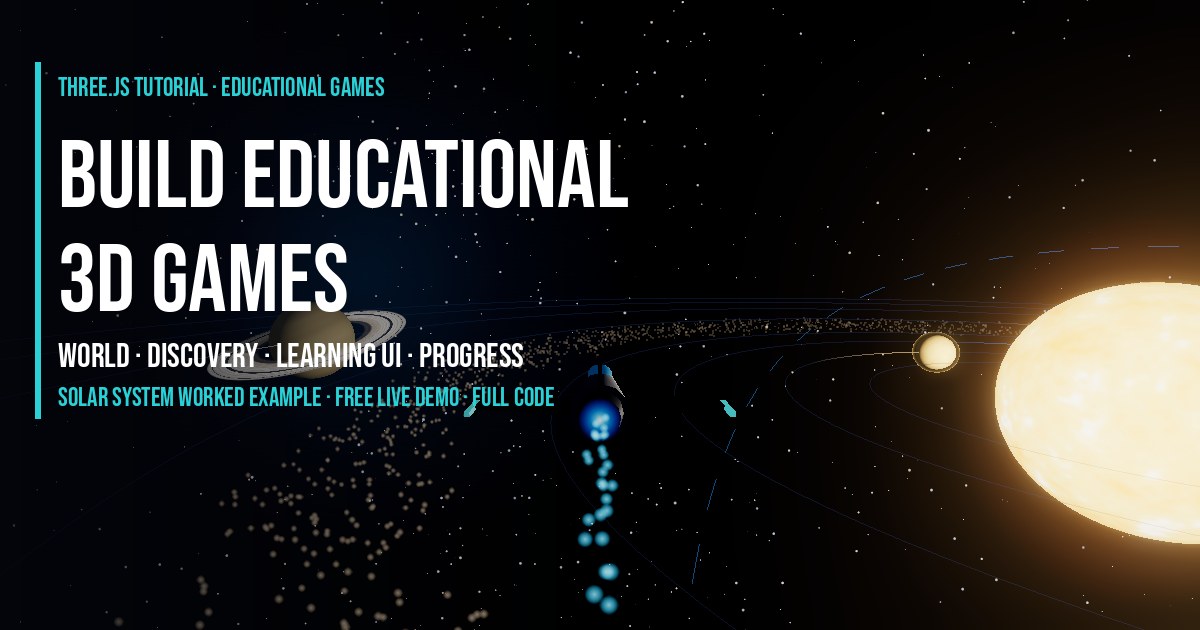
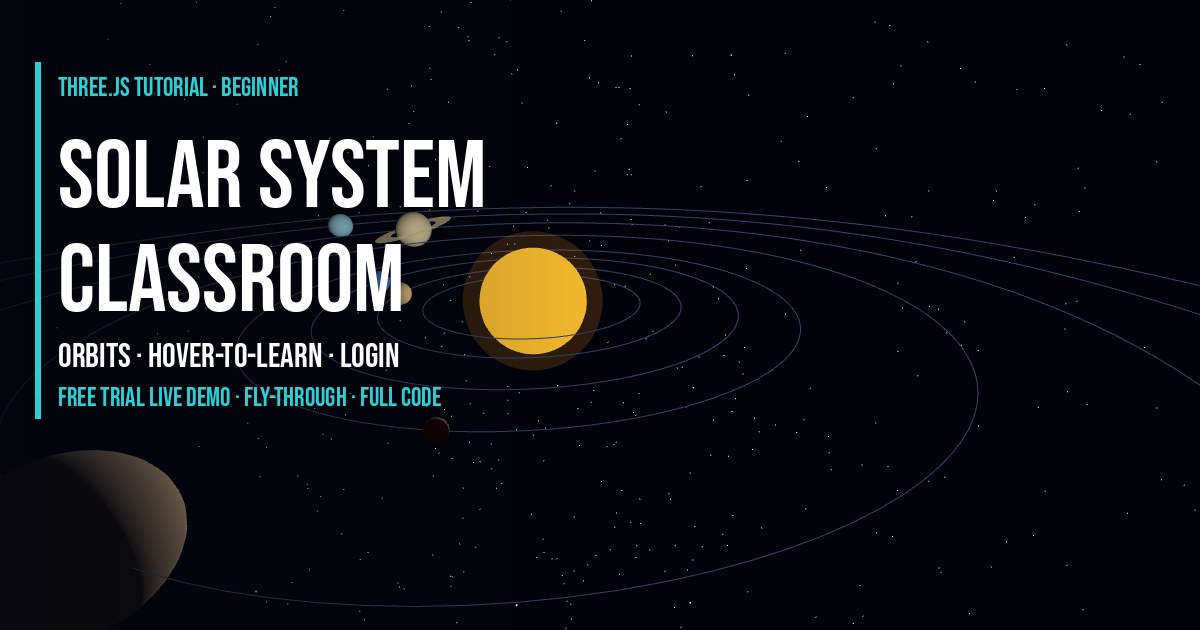
Fly your spaceship in third person to all 12 goals: the Sun, the 8 planets, the dwarf planets Ceres (in the asteroid belt) and Pluto (past Neptune), and a comet. Tap (phones) or click (desktop) any world you can see to open its WORLD DISCOVERED card, or fly near a world so it glows with a cyan outline and press Enter with a picture and a fun fact. Cards never pop up on their own, and the same goes for the asteroid belt: its nearest rocks glow and you tap or click them for the bonus card. The belt between Mars and Jupiter is solid, so steer around the rocks. Reach every goal to unlock the 25-question Mission Quiz: build streaks, earn up to three stars and a pilot rank, and beat your high score. Play free with Google sign-in or as a guest.
Desktop: W / S throttle · A / D turn · arrows pitch · E / Q climb · Shift boost · Esc exit
Xbox controller supported
Phones: press Play, turn to landscape · left stick pitch + yaw · right stick throttle · ✕ exit, ⛶ fullscreen
FAQ
Is Planet Quest an educational 3D game world?
Yes. Planet Quest is a free educational 3D game world for STEM learning: students fly a spaceship through the solar system, discover the Sun, eight planets, the dwarf planets Ceres and Pluto, and a comet, read a fact card for each world and finish with a quiz. It is a Three.js game rendered with WebGL that runs in any modern browser on desktop and phones.
Is Pluto a planet in Planet Quest?
Pluto is a dwarf planet. It was called the ninth planet after Clyde Tombaugh found it in 1930, but astronomers reclassified it as a dwarf planet in 2006. In Planet Quest it orbits past Neptune and is one of the 12 goals. Its card shows its bright heart-shaped plain, Tombaugh Regio, and its 5 moons, including Charon.
What is Ceres and where do I find it?
Ceres is a dwarf planet and the largest object in the asteroid belt, about 940 km across. Look for a round, grey-blue sphere with a soft glow inside the belt between Mars and Jupiter. It is bigger than the asteroids around it and has bright white salt spots in its Occator crater.
How do I discover a world?
Tap (phones) or click (desktop) any world you can see on screen to open its WORLD DISCOVERED card. You can also fly near a world until it glows with a cyan outline, then press Enter or the A button on an Xbox controller. Each world counts once, and the award tracker at the top of the screen lights up as you find them.
What are the controls on desktop, Xbox controller and phones?
Desktop: W / S throttle and brake, A / D turn, arrow keys pitch, E / Q climb and descend, Shift boost, click or Enter to explore, Esc to pause. Xbox controller: left stick to fly, RT / LT throttle and brake, LB / RB boost, A to explore, B to close a card, Start for the pause menu or Mission Quiz. Phones: left stick pitch and yaw, right stick throttle, and tap a world to explore it.
Does Planet Quest work on phones and tablets?
Yes. Press Play and turn your phone or tablet to landscape. On-screen touch sticks fly the ship, you tap worlds to explore them, and the corner buttons exit the game or switch to fullscreen. It runs in the browser with nothing to install.
How does the Mission Quiz work?
The Mission Quiz unlocks after you find all 12 goals: the Sun, the 8 planets, Ceres, Pluto and the comet. It has 25 multiple-choice questions based on the facts in the World Discovered cards. Each right answer earns 100 points plus a streak bonus, and at the end you get up to three stars, a pilot rank and a saved high score. You can retry any time.
Do I need an account to play?
No. Play free by signing in with Google or by choosing Play as Guest, and there is no time limit on the game.
Can teachers use Planet Quest in class?
Yes. Planet Quest is a free STEM activity for learning about the solar system. Students explore the Sun, planets, dwarf planets and a comet, read a short fact card for each one, then check what they learned with the Mission Quiz. It runs in any modern browser on school computers, Chromebooks and tablets.
What is the asteroid belt bonus card?
The asteroid belt between Mars and Jupiter has its own bonus card. Fly into the belt or tap or click it to learn what asteroids are made of and that Ceres is the largest object there. The bonus card is extra and does not count toward the 12 goals. Watch out: the big rocks are solid, so steer around them. Bumping one only shows a friendly warning and never costs points.